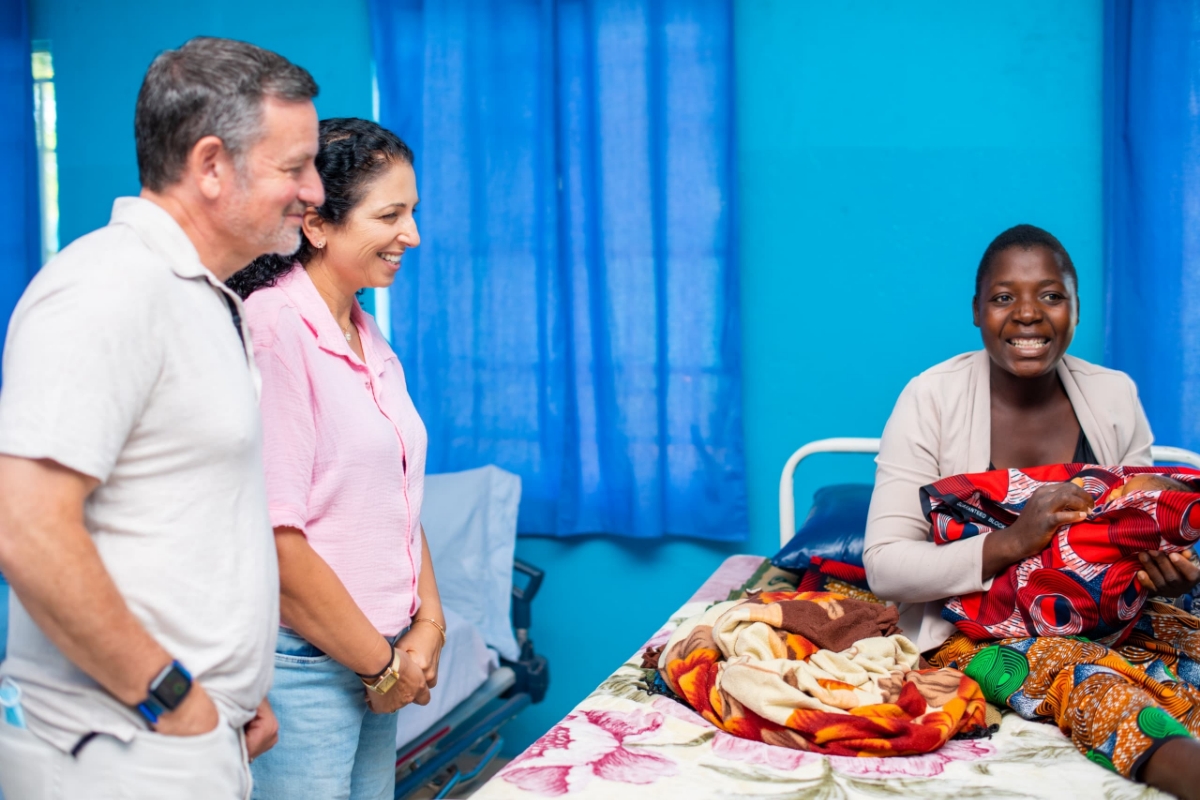
This year, ImpactWell expanded to Malawi, where health statistics are staggering: 0.5 doctors per 100,000 people (compared to 297 per 100,000 in the United States); one of the world’s highest maternal and infant mortality rates; and an alarming instance of TB, malaria, and other ailments.
Israeli medical technology companies have extremely innovative diagnostic solutions that help doctors hundreds of miles away see images that save people’s lives,” said Jay Ruderman, JDC Emeritus Board Member and RFF’s president.
ImpactWell is now working alongside commercial partners and Malawi’s Ministry of Health to introduce technologies piloted successfully in Ghana and bring Israeli medical missions to build local capacity in point-of-care ultrasound for maternal healthcare, neonatal resuscitation care, trauma care, eye surgery, and other areas. In addition, this program will bolster maternal health by deploying mobile clinics and a Nurses on Bikes model to provide prenatal and postnatal care in remote areas.
“What we’ve done in Ghana has taught us so much — and for me, it’s magic,” said Avital Sandler- Loeff, executive director of JDC’s disaster response and international development efforts. “In Malawi and elsewhere, we can save lives by training professionals and using technology to help people who would otherwise suffer.”
This work lies at the heart of JDC’s commitment to fostering meaningful connections amoung Jewish communities, Israel, and developing countries.
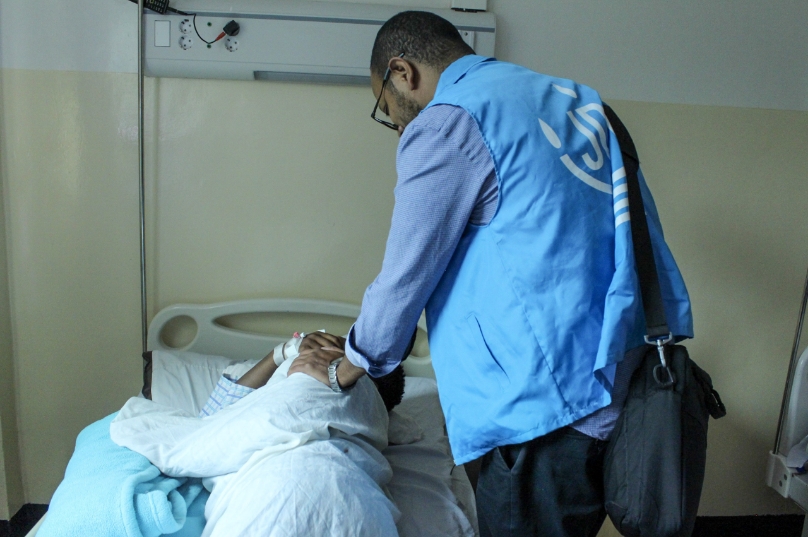
Our guiding ethos is reflected in JDC’s initiatives in Ethiopia and Chad, where, from 2022 to 2025, JDC partnered with Schusterman Family Philanthropies to provide state-of-the-art medical equipment, capacity-building activities, and seminars led by Israeli medical experts.
Core to these efforts is the Ethiopia Prosthetics and Orthotics Lab (EPOS), established by JDC in partnership with the country’s Ministry of Health to bring modern rehabilitation care to thousands of injured people and those with disabilities. Just this year, JDC provided EPOS with more than 150 different kinds of machinery, raw materials, and physiotherapy equipment from leading European orthotics suppliers.
Now, for the first time, Ethiopia can manufacture prosthetics and orthotics devices domestically, with the EPOS lab able to produce more than 20 per day.